
2025 is shaping up as a year where macro policy, AI-driven capital spending and geopolitics jointly decide winners and losers in public markets. Expect a generally constructive environment for equities if inflation continues to ease and central banks move toward easing – but leadership will be narrow and dependent on earnings and technological adoption. Institutional research is broadly bullish on equities for the 12-month horizon, yet warns that inflation persistence and policy missteps could trigger sharp corrections.
Quick outlook: macro picture shaping markets in 2025
Three macro trends matter most:
- Monetary policy normalization and eventual easing: After the multi-year hiking cycle, central banks have begun to signal cuts or are being pressured to consider easing if growth softens. Markets price several cuts in 2025, which tends to support equities overall but increases dispersion across sectors.
- Disinflation but uneven core pressures: Global headline inflation has been trending lower, yet services and some core components can remain sticky – meaning the Fed and peers may be cautious about aggressive easing. This tension is a core market risk.
- Technology capex, especially AI, is a major growth engine: Corporates and hyperscalers continue to spend on AI compute and data-center infrastructure, creating durable tailwinds for semiconductors, storage and cloud ecosystem players. Consultancy and industry reports expect chip demand and data-center investment to accelerate in 2025.
Five central stock market predictions for 2025
1. Earnings-driven rally with elevated valuation sensitivity
Markets in 2025 will reward companies that deliver tangible earnings growth. With investors paying a premium for durable growth, stocks that fail to meet revised expectations are likely to correct sharply. In short: earnings beat → multiple expansion; earnings miss → multiple contraction. Institutional strategists have raised year-ahead S&P 500 targets on the back of stronger corporate momentum, but all of this hinges on earnings delivery.
2. Interest-rate path: the headline driver for multiples and sectors
Even modest Fed rate cuts tend to lift equity multiples, especially for long-duration growth stocks. Conversely, sticky inflation or hawkish Fed rhetoric would favor value/cyclical sectors and push down richly priced growth names. Market-implied probabilities currently point to a sequence of rate moves in 2025 that markets will monitor closely – every Fed statement could move sector leadership.
3. AI, semiconductors and data-center names remain structural winners
A core theme for 2025 is sustained corporate investment in AI infrastructure: GPUs, memory, storage and networking. Industry outlooks point to a strong semiconductor cycle led by generative-AI demand and cloud build-outs – this supports hardware suppliers, certain software infrastructure players, and cloud providers. Expect continued investor interest (and volatility) in these names.
4. Cyclical rebound: industrials, commodity-related and select financials
With potential rate cuts and better global growth, cyclicals could see a rebound. Industrial firms tied to infrastructure and corporate capex may benefit. Similarly, commodity prices can react to growth optimism, helping resource companies. Some banks may also perform better if net interest margins stabilize and loan growth recovers. Diversified exposure helps capture this cyclicality.
5. Volatility & rotation – be ready for abrupt style shifts
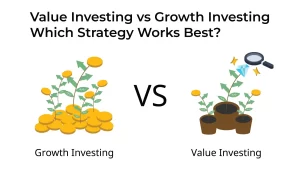
Expect sharper rotations between growth and value as investors reprice risk with every macro data release. Regional differences (US vs. Europe vs. emerging markets) will stem from policy timing, energy prices, and geopolitical developments. Tactical managers will likely continue to harvest rotational trades – investors should build portfolios to handle higher short-term volatility.
How investors should position portfolios (practical guidance)
Below are practical, actionable steps aligned with the 2025 outlook.
A. Stick to quality, but trim excesses
Focus on companies with strong free cash flow, return on equity, and pricing power. For richly priced growth names, manage position sizes to limit drawdown risk.
B. Layer exposure to AI & semiconductors selectively
Rather than all-in bets, use a mix of:
- Direct leaders (large-cap cloud and chip makers)
- Suppliers (memory, storage, networking)
- Thematic ETFs for diversified exposure to AI-related capex
Industry research supports sustained tech capex in 2025, but expect performance dispersion across names.
C. Keep a cyclical sleeve
Allocate a tactical portion to industrials, energy/resource names, and select financials that benefit from better growth or improving loan cycles. These can provide upside if growth surprises on the upside.
D. Defensive ballast & cash management
Hold high-quality bonds (or short-duration fixed income) and cash buffers to take advantage of corrections. If the Fed signals cuts and equities gap higher, you can re-deploy cash without panic buying.
E. Use options and hedges sparingly
For concentrated positions, consider collars or low-cost put protection to limit downside without giving up all upside.
Risk checklist – what to watch in 2025
- Inflation surprises: A re-acceleration in services inflation would prompt policy tightening and could derail multiple expansion.
- Geopolitical shocks: Trade disruptions or conflict can quickly reroute global supply chains and investor flows.
- Earnings disappointment: Weak margin recovery or downbeat guidance from major tech firms would hit multiples.
- Credit stress or liquidity events: Problems in credit markets could spill over to equities and tighten financial conditions.
- Crowded trades unwind: Popular themes (e.g., a handful of mega-cap AI leaders) could see sharper pullbacks if investor positioning becomes one-sided.
Conclusion: a balanced, tactical framework
2025 offers both opportunity and risk. The most likely path for equities is modestly positive if inflation continues to cool and central banks ease. However, the winners will be companies that combine real earnings growth with scalability – especially those tied to AI infrastructure and data-center investment. Adopt a quality-first allocation, add targeted exposure to AI and cyclicals, and keep liquidity for tactical moves. For readers of Investo Pedia 360, this means focusing on research-driven picks, diversification, and active risk management.
Final note
Markets are always evolving – staying informed, disciplined, and diversified is essential. Keep this guide from Investo Pedia 360 handy as a framework for 2025: emphasize earnings quality, leverage thematic secular trends like AI carefully, and always pair upside hunting with downside protection.
FAQs
Will the S&P 500 keep rising through 2025?
Institutional strategists are generally constructive on the S&P 500 over the next 12 months, citing stronger economic momentum and policy support, but the path may include corrections and rotation; much depends on Fed policy and earnings.
Which sectors are the best bets for 2025?
Top candidates: AI/semiconductors/data-center ecosystem, selective industrials and energy/resource names (on cyclical improvement), and financials with clean balance sheets. Maintain diversification and avoid concentration risk.
How should a retail investor hedge against a sudden market downturn?
Options (protective puts or collars), holding some high-quality bonds, and keeping a cash buffer are practical hedges. Size hedges proportional to the risk of concentrated positions.
Is now the time to buy AI and chip stocks?
AI-related structural demand is a multi-year theme, but valuations matter. Consider dollar-cost averaging or using ETFs for diversified exposure rather than single-name concentration. Industry reports forecast strong chip demand in 2025 driven by generative AI.
What macro data releases should I watch most closely?
Key datapoints: CPI/PCE inflation prints, employment reports, central bank FOMC statements and dot plots, and major corporate earnings (particularly from megacap tech and chip firms). These drive both sentiment and market structure.